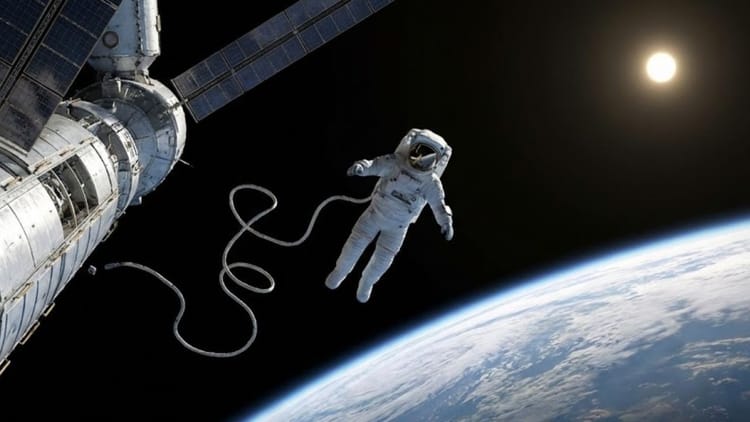
Aging is often considered a slow and permanent process, but a new study on astronauts in space tells a different story. Research has revealed that the body shows rapid changes in space, but as soon as it returns to Earth, many of the effects automatically subside.
Scientists found that astronauts who went on short-term space missions showed changes in the bodies that are usually associated with aging. Conditions like microgravity, sleep disturbances and physical stress put the body into a kind of “stress mode”. However, this does not mean that astronauts actually became old. These changes were temporary and the body took care of itself as the environment changed.
How was the study done?
This research named “Astronauts as a Human Aging Model” included four astronauts who spent nine days on the International Space Station. Scientists took blood samples before launch, during the mission and after returning to Earth, allowing the body’s changes to be understood in real time.
In this study, age was measured not by calendar but by epigenetic clocks. These clocks tell the biological age of the body based on changes in DNA, which can be affected by stress and environment. While in space, there was a temporary increase in these clocks, but it was at different levels in each astronaut.
The picture changed as soon as it returned to earth
After coming back to Earth, the biological age of most astronauts started becoming the same again. In some cases it even went below the initial level for a while. According to scientists, the immune system played a big role in this, which is capable of recovering quickly.
A new way of looking at age
The researchers clearly say that this study does not prove that space travel increases age faster in the long run. The mission was small and the participants were also less. Results may be different in longer space missions. Nevertheless, this research shows how quickly the human body can adapt to difficult circumstances.
This study strengthens the idea that aging is not a one-way process. Our environment and circumstances can increase or decrease the speed of our aging. Space exposed these changes for some time, and upon returning to Earth the body regained balance.