
Solar eclipse 2026 Image: Freepik
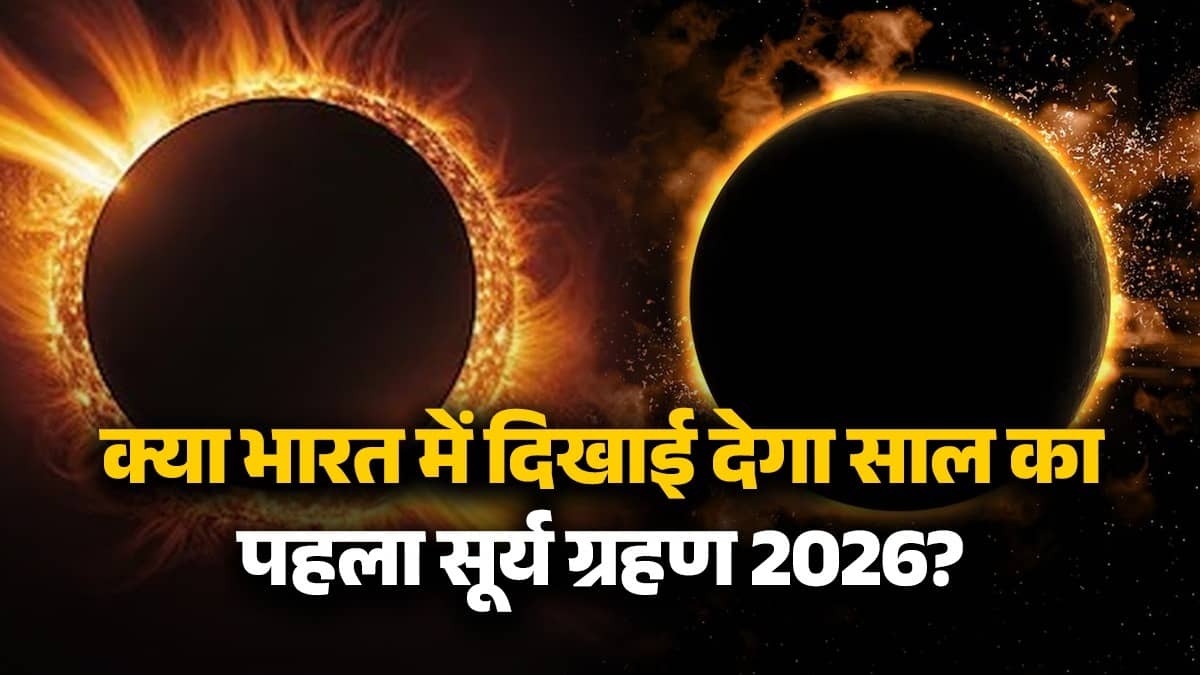
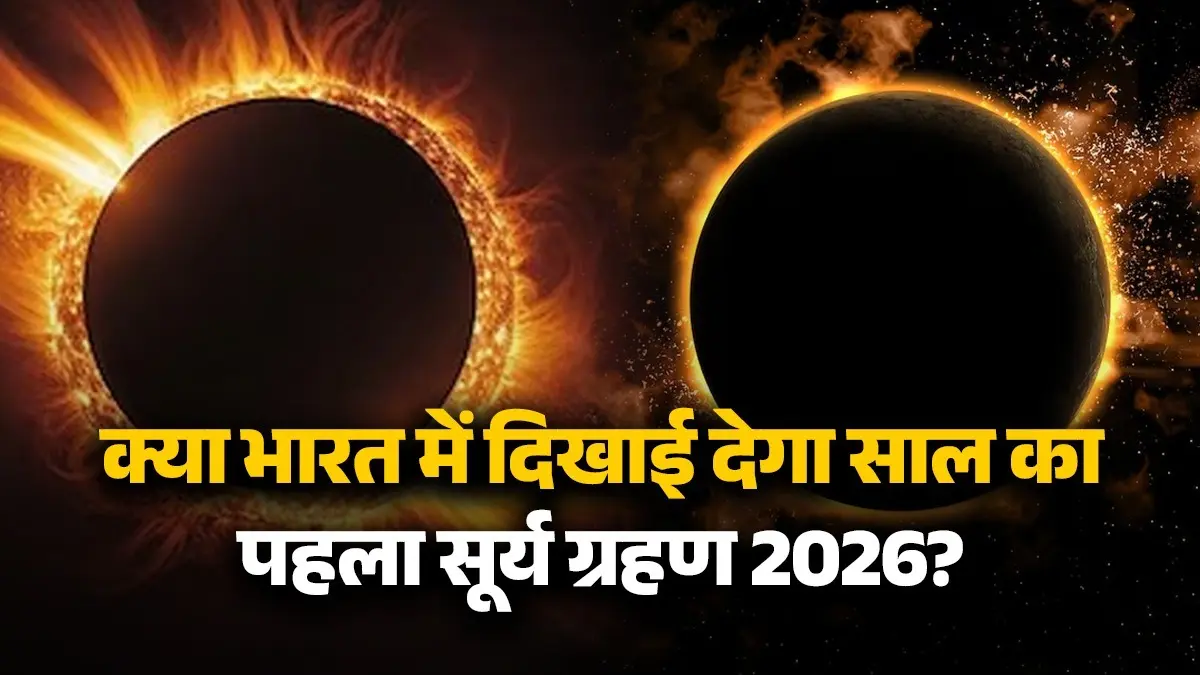
Surya Grahan 2026: The first solar eclipse of the year 2026 is going to occur tomorrow i.e. on 17th February (Tuesday). It is falling on the day of Phalgun Amavasya. During the solar eclipse, a ‘Ring of Fire’ i.e. a bright ring of fire will be visible in the sky. But it will not be seen in India.
According to Indian time, this annular solar eclipse will start at 3:26 pm and will continue till 7:57 pm. Its total duration is said to be around 4 hours 31 minutes. The peak time of the eclipse will be between 5:13 pm to 6:11 pm. At this time, the Moon’s shadow will fall on the Sun, but will not cover it completely. A ring of sunlight will be visible from behind, hence it is being called ‘Ring of Fire’.
A bright ring will be visible around the Sun
During Annular Solar Eclipse, the Moon will not be able to cover the Sun completely. This astronomical event is going to be very beautiful.
Where will the solar eclipse be visible in India?
According to the information received, this eclipse will not be visible anywhere in India. It will especially pass through Southern Africa (Zimbabwe, Zambia, Tanzania, Namibia, Mauritius, Botswana, Mozambique), Antarctica and some areas of South America (Argentina, Chile). But nothing will be visible in India.
Will there be Sutak period in India or not?
Since the solar eclipse will not be visible in India, the Sutak period will also not be valid here. In Hindu tradition, Sutak starts 12 hours before the solar eclipse, but this time there is no religious restriction. You can do puja, food, auspicious work or routine work in a normal manner.
These precautions are necessary where the solar eclipse will be visible
Solar eclipse should never be viewed with naked eyes, as it can cause harm to the eyes. Solar filter glasses, safe binoculars, or a telescope with filters can be used. At the same time, pregnant women, children, elderly and sick people have to take special care. It is advisable to stay indoors during the eclipse.
Solar eclipse is considered sacred in Hindu scriptures. Chanting Hanuman Chalisa, Surya Mantra or Narayan Kavach at the time of eclipse is considered auspicious. At the same time, after the eclipse ends, a bath is taken and charity is done by sprinkling Ganga water. If you want, you can watch the live stream of the solar eclipse on NASA’s website.
Also read: Unknown vehicle hits motorcycle in Panipat, 3 dead