What is the name of the largest freshwater lake?
indianculture.gov.in According to India, Loktak Lake located in Manipur is the largest freshwater lake in South Asia. It is spread over 250 square kilometers. During the rainy season it covers an area of up to 500 square kilometers. Loktak Lake has a lot of biodiversity. The lake is also culturally important, inspiring local dances, festivals and traditions. Loktak Lake is a unique confluence of nature, wildlife and human life.
Life of human population on Loktak Lake
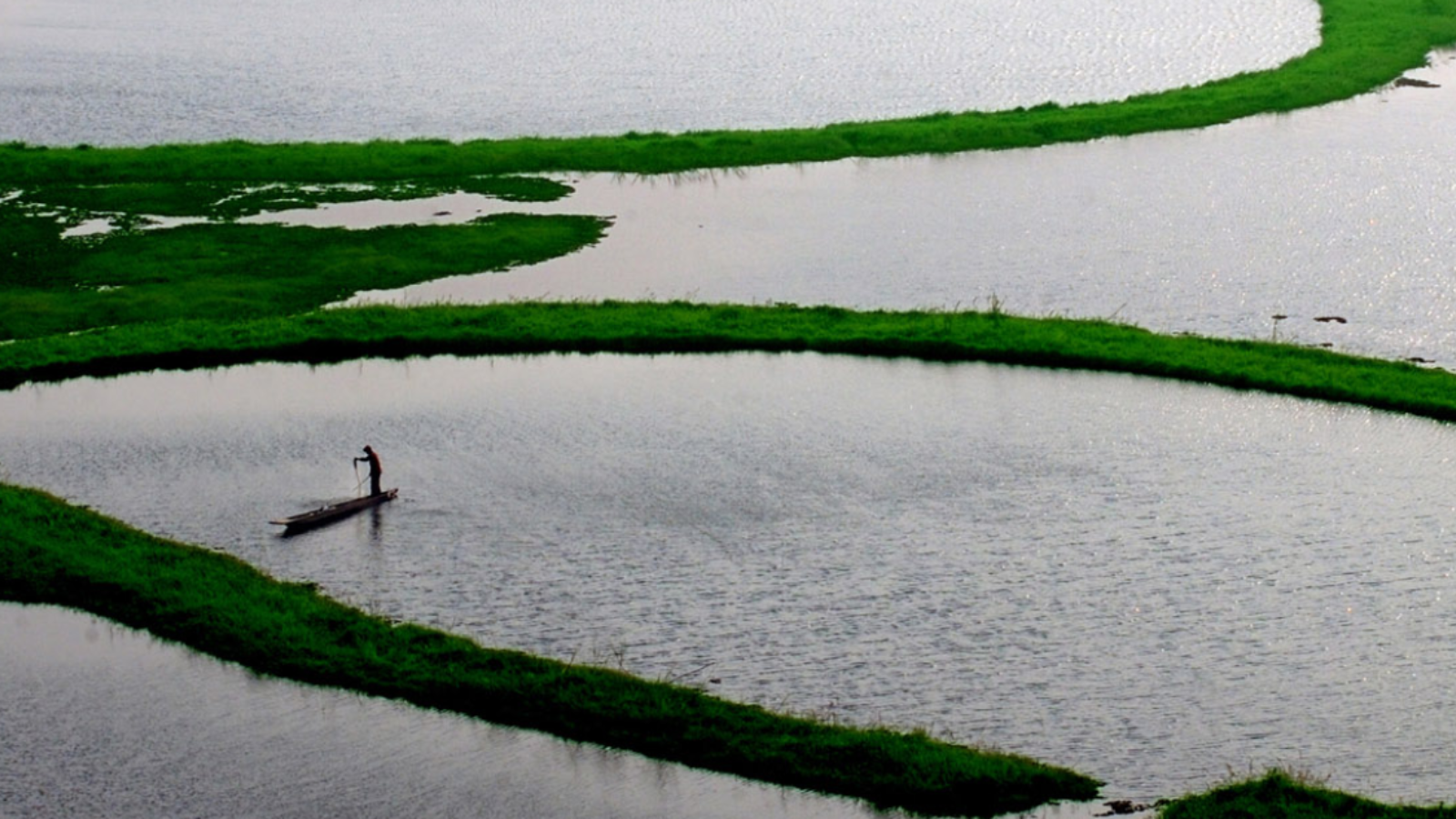
The life of human population on Loktak Lake looks very different. People have built houses here. The local people live in small bamboo huts. Bamboo poles and wooden planks are laid on the wet ‘phumdis’ so that they can be easily walked on. Long and thin boats (canoes) are used to go out or roam around the lake. Fishing is a large part of the local people’s diet. It is said that people here live on floating islands.
What is Loktak Lake famous for?
Loktak Lake is famous for its phumdis (group of floating islands). Phumdies are floating islands made of plants, soil and organic matter. These phumdies float on water because they are light and floating. Some areas are so dense that they can be inhabited by human settlements and are used for fishing and farming. The southern part of the lake is protected as a Ramsar wetland.
Facts related to Loktak Lake
- Loktak Lake is the largest freshwater lake in South Asia.
- This lake expands to 500 square kilometers during the rainy season.
- Loktak Lake is famous for phumdees, which are unique floating islands made of plants and mud.
- Keibul Lamjao National Park, which is the world’s only floating national park, is located on this lake.
- The endangered Sangai deer, also known as the ‘dancing deer’, lives in this floating park.
- Local people live in bamboo huts built on phumdis.
- Fishing is a major part of the livelihood of the local community.
Connection of Loktak Lake and Sangai Festival
Loktak Lake inspires local art, music and dance. The famous Khamba Thoibi dance is known for the mythological story associated with the lake. Sangai Festival, named after the dancing deer, is celebrated every year to promote the culture, cuisine and traditions of Manipur. This lake blends nature, wildlife and human culture into a unique living landscape.