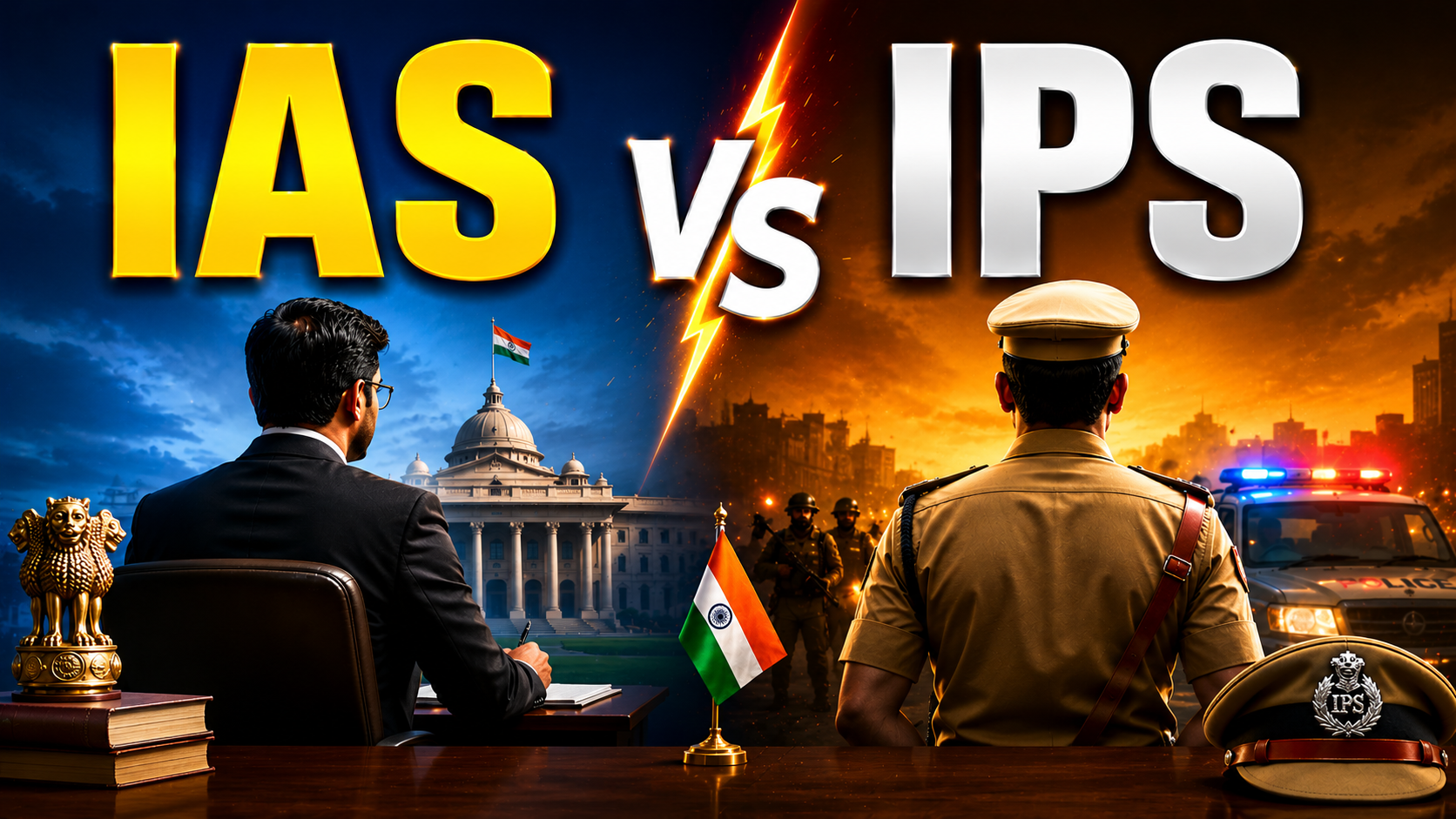


People generally consider these two positions to be equally powerful, but in reality there is a big difference in their scope, authority and responsibilities. The main differences between these two services are as follows:
IAS vs IPS Explained: One can reach the highest posts in the country by clearing the civil service examination conducted by the Union Public Service Commission (UPSC) in India. Among these services, IAS (Indian Administrative Service) and IPS (Indian Police Service) are the most popular and powerful posts. People generally consider these two positions to be equally powerful, but in reality there is a big difference in their scope, authority and responsibilities. The main differences between these two services are as follows:
IAS vs IPS: Scope and Key Functions
- IAS: The main field of this service is Civil Administration. The main job of an IAS officer is to formulate government policies and ensure their proper implementation. They plan and manage the developmental works of the country.
- IPS: The main field of this service is the Police Department. The main job of an IPS officer is to maintain law and order in the country or state and control crime.
IAS vs IPS: Positions and Examples
- IAS: Officers progressing in the administrative service eventually hold higher administrative posts like DM (District Magistrate), Collector, Secretary (Secretary) of various government departments, Commissioner and CEO.
- IPS: Officers selected in the police service get successive promotions to SP, DCP, IG, DIG, ADG and the highest post of the police department i.e. DGP (Director General of Police).
IAS vs IPS: Type of authority
- IAS: IAS officers have administrative powers. He is the administrative head of the entire district or division and has the ultimate authority to take policy decisions.
- IPS: IPS officers have legal powers. They are empowered to take action against criminals and strengthen security arrangements within the ambit of law.
IAS vs IPS: Relationship with the public
- IAS: They are directly connected with the public through development works, government schemes and various public services. Schemes for the welfare of common citizens reach people through them.
- IPS: They engage with the general public through security, crime control and law and order maintenance functions. Providing peace and secure environment in the society is their priority.
In brief, IAS is the brain of the administration which makes policies, while IPS is a strong shield protecting law and order. Both posts are indispensable and extremely important in their own right for the development and good governance of the country.