Let us tell you in 5 points whether there is a provision for such ‘selective boycott’ in ICC rules or not?
1. Not playing in the match is a violation of the agreement with ICC.
There is no direct provision under ICC rules against not playing a particular match in a tournament. But ICC has taken some special steps to prevent teams from boycotting matches without any specific reason. The first of these is the Tournament Participation Agreement, which is signed by the ICC and every team participating in the tournament. Pakistan has also signed this agreement with the ICC, which means that its team is legally bound to play in every match of the ICC T20 World Cup 2026. The situation of not playing the match will be considered a violation of the agreement, after which ICC can take legal action against the Pakistan Cricket Board.
2. Rule of giving walkover to the other team
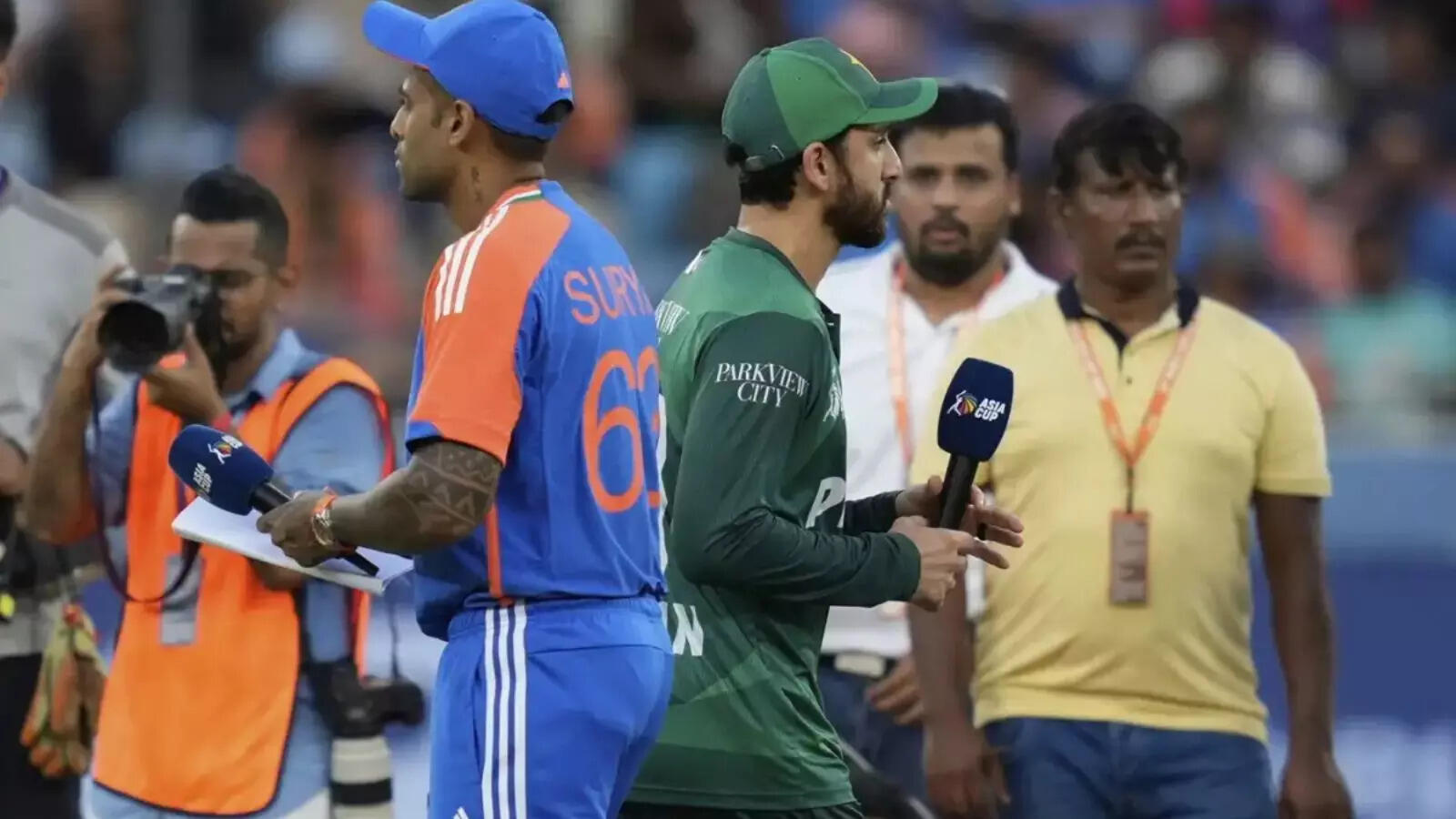
According to the ICC Playing Conditions, if a team refuses to take the field for a match, it will be considered a loser. In such a situation, full points will be given to the other team. However, for this the other team will have to enter the field for the match. This means that if Indian captain Suryakumar Yadav reaches the pitch for the toss when called by the match referee and Pakistani captain Salman Aga is missing, then India will get full 2 points.
3. Rule related to net run rate
Under ICC playing conditions, a team not taking the field also affects its net run rate. Under Clause 16.10.7, the team that does not take the field for the match will have the entire 20 overs counted without bowling the ball and its score will be considered as 0. This will have a very bad impact on Pakistan’s net run rate. If Pakistan loses even one of its remaining three group matches in the T20 World Cup 2026, then its chances of reaching the Super-8 will be in jeopardy.
4. ICC can impose financial and commercial fines
Under ICC rules, in case there is no match in the T20 World Cup, the broadcaster can seek compensation for its losses from the ICC. The ICC can direct the PCB responsible for the match not being held to compensate it by transferring this legal claim. The broadcaster was expected to get an ad revenue of around 25 to 30 million dollars from the India-Pak match. PCB may have to pay this compensation.
Apart from this, ICC can also exclude Pakistan from the chart in its annual revenue share. Due to this, Pakistan gets financial assistance of 30 to 35 million dollars every year, which is about 70 to 80 percent of the total budget of PCB. If this amount is not received from ICC, PCB may face bankruptcy.
5. Action possible under ICC constitution also
Instead of the Pakistan Cricket Board, the Government of Pakistan has announced not to participate in the match. The ICC may declare this as political interference in the game. According to Article 2.4D of the ICC Constitution, each Member Board is required to be an autonomous body without political interference. In such a situation, if ICC considers it political interference then PCB may be banned. However, former PCB and ICC chairman Ahsan Mani has claimed that this clause is not applicable in this case, because India has also refused to play in Pakistan in the Champions Trophy 2025 citing its government. But in that case, the Indian government did not stop its team from playing in the multinational tournament with Pakistan on a neutral venue. In such a situation, Pakistan’s case of ‘selective participation’ can be considered a violation of the rules of the tournament and action can be taken against it.