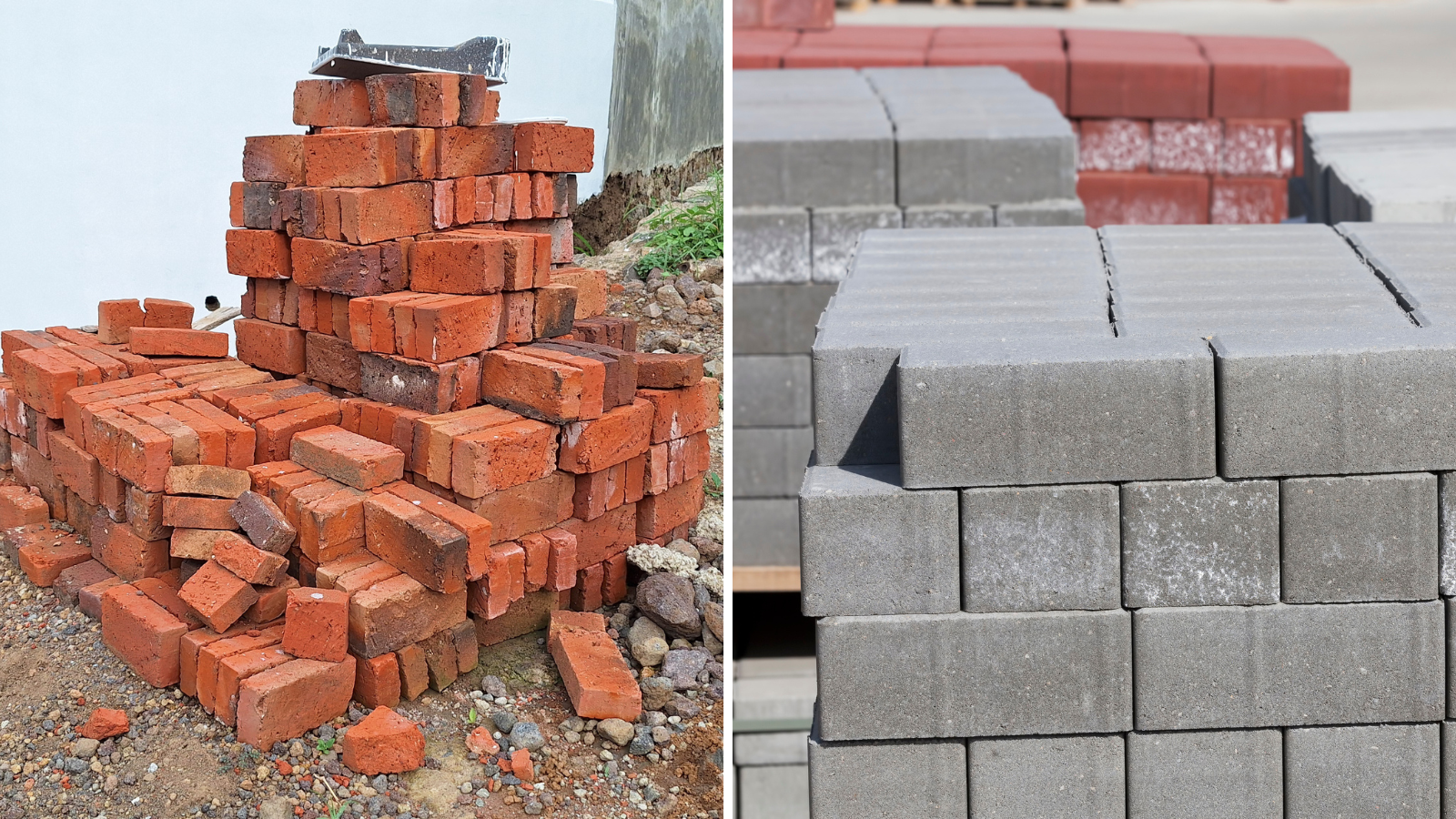
Fly ash bricks are not only stronger than red bricks but also absorb less water, which prevents the problem of plaster falling or dampness from the walls in future. After knowing the difference between red clay brick and fly ash brick, you will understand for yourself which one is the best and which one will reduce the cost of building a house.
Budgeting and Savings
If we talk about total cost, fly ash bricks prove to be more economical. Even though their per brick price is around that of red brick, their use saves spices, less plaster is used and there is less wastage of bricks. According to civil engineers, by selecting fly ash bricks, one can save a lot of money in the total cost of building a house.
Disclaimer: The claims made in this article are based on YouTube videos and information found on the internet. NBT does not take responsibility for its truthfulness and accuracy.
strength and power
The compressive strength of brick is most important in any construction. According to civil engineers, the strength of fly ash bricks is higher than red clay bricks. Red bricks often do not achieve uniform strength when fired in the kiln, whereas fly ash bricks are machine made, giving them greater and more uniform load bearing capacity.
Durability and moisture
Red clay bricks often absorb moisture, which causes the problem of dampness in the walls. Whereas fly ash bricks become stronger with time. Fly ash bricks are also dense, due to which they last for a long time without breaking and increase the lifespan of the house.
water absorption capacity
Red clay bricks drink a lot of water. When the wall is plastered, these bricks absorb water from the plaster, causing the plaster to become weak and prone to falling off in the future. Whereas fly ash bricks absorb very little water. Due to this, the grip of the plaster remains strong and the risk of dampness is significantly reduced.
waste reduction
Breakage of bricks during construction is a major loss. Red clay bricks are quite fragile and about 10% gets wasted during loading-unloading. Whereas, fly ash bricks are very strong and their wastage is limited to only 5%. This simply means that fewer bricks have to be ordered and money is saved.
Plastering and finishing
The shape of red bricks is often slightly crooked, resulting in a bumpy wall surface. To level it, more cement-sand mortar and thick plaster is required. Whereas fly ash bricks are made in moulds, hence their shape is precise and the surface is smooth. Because of this, less mortar is used in plaster and your cost reduces.
Engineer told the best brick

impact on environment
In today’s time, it is also important to take care of the environment. Fertile soil is used to make red bricks and the smoke coming out of the kilns causes pollution. On the other hand, fly ash bricks are made from the ash generated from thermal power plants. They conserve the soil and there is little to no air pollution while making them, hence they are considered eco-friendly.