Amid growing conflict with tech platforms in the era of generative AI, Indian news publishers have taken a tough stance on unauthorized and unpaid use of their journalistic content. He says that it is not appropriate to use news content as free data for training AI systems, because it is intellectual property created with professional effort, resources and investment.
In the inaugural session of the AI Impact Summit 2026 held on 16 February in the capital Delhi, prominent representatives from the media and publishing world clearly demanded that publishers should be paid fairly for the journalism content used to train AI models. He also stressed that news content should be treated separately from general Internet data, as verified and professional reporting not only increases the accuracy of the model but also reduces the possibility of false or misleading answers.
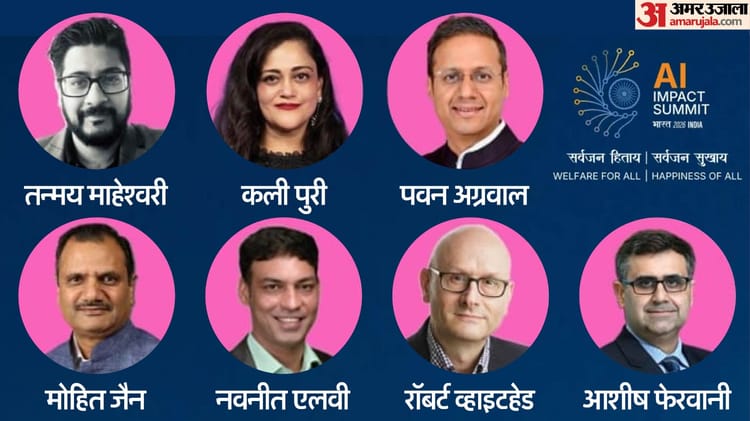
Digital News Publishers Association (DNPA) organized a session on ‘AI and Media: Opportunities, Responsible Pathways and the Road Ahead’. The session was attended by Tanmay Maheshwari, Managing Director, Amar Ujala Group, Kali Puri, Vice-Chairperson, India Today Group, Pawan Aggarwal, Deputy Managing Director, Dainik Bhaskar Group, Mohit Jain, COO, Bennett Colman Group, Navneet LV, CEO, The Hindu Group, Robert Whitehead, Head of Digital Platform Initiative, International News Media Association and Ashish Pherwani, EY Group.
Journalistic content is intellectual property, not free data
Panelists stressed that professional journalism content should be considered distinct from ordinary Internet data because it is intellectual property created through investment, infrastructure and talent. Speakers said use of such content should be on a contractual basis, and not without permission or payment.
The demand comes at a time when there is growing concern among publishers in many countries, including India and the US, that their copyrighted content, such as news reports, is being used by AI companies to train their foundational models without permission and payment. On this issue, publishers associated with DNPA have also filed a legal challenge against OpenAI in India for alleged ‘illegal use of copyrighted material’.
Will AI replace journalists?
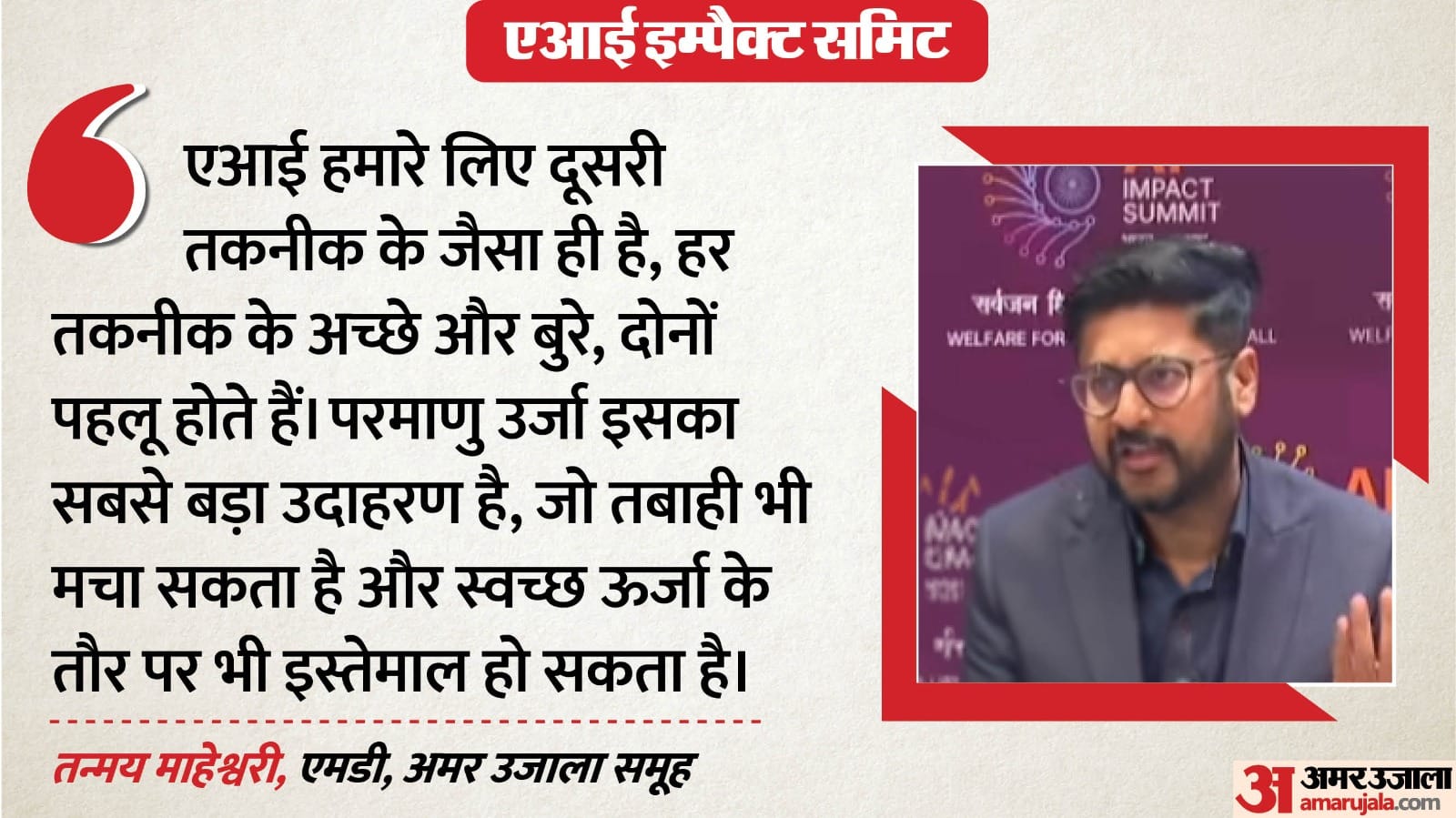

Responding to this, Tanmay Maheshwari, Managing Director of Amar Ujala Group, said, “For us AI is like a technology. Any other technology has both good and bad aspects. The classic example of this is nuclear technology. This can make the world’s most dangerous bomb and on the other hand it is also one of the cleanest sources of energy. Something similar happens with AI also. The question is how can you use it. You always have to involve humans with it. At Amar Ujala we take a comprehensive approach. We focus on readers and news coming from tier-two, tier-three cities. AI can be used to supplement what humans do, to add depth and enhance content. That’s why we don’t consider AI a substitute for anything.
Also read: India-AI Summit: Tanmay Maheshwari said- Every technology has good and bad aspects, but AI will not replace anyone.
AI will not reduce the value of journalism, but will increase the importance of trust.
Mohit Jain of Times Group said AI may commoditize information, but it will also increase the premium value on credibility and accountability. According to him, editorial discretion, verification and institutional memory are the basic needs of journalism in a diverse and complex society, which are the main basis of trust building.
However, INMA’s Robert Whitehead warned that referral traffic to publishers from search engines and social media has declined sharply over the past year due to features such as AI chatbots and AI overviews, putting pressure on their business models.
Use of AI in newsroom, but human role important
The panel also made it clear that AI is not a substitute for journalists, but a supporting tool. Maheshwari of Amar Ujala said, “We see AI as a means to improve the quality of news. Ultimately our goal is to create better content for our users. We never believe that AI will replace anyone. The content layer is the most important layer in this entire AI engine. Apart from this, data layer, processing layer, application layer and power-energy layer are also included. But the content layer is the only layer that keeps changing. As a responsible organization, we believe that we should use this layer to improve our content production process. “Common use cases include increasing the depth of content, automating repetitive tasks, and using the time saved for more research-based and quality work.”