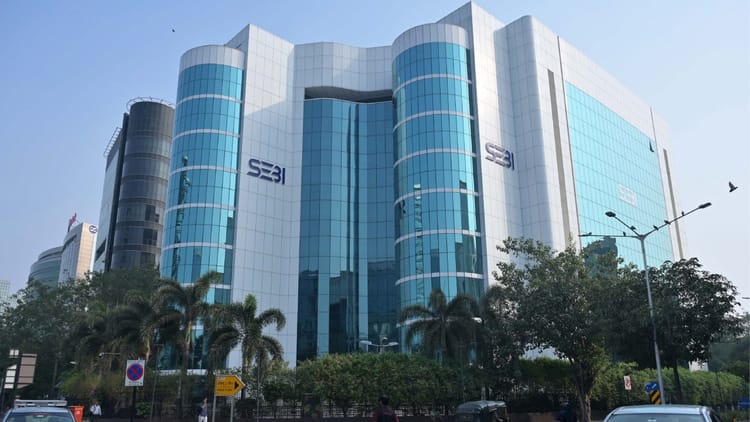
In view of the wildly increasing craze of ‘Futures and Options’ in the Indian stock market and the risk of retail investors, market regulator SEBI has taken a big and tough decision. SEBI has currently banned the entry of two emerging exchanges of the country – National Commodity and Derivatives Exchange (NCDEX) and Metropolitan Stock Exchange (MSE) in the equity derivatives segment.
The regulator has bluntly advised these exchanges to strengthen their ‘cash market’ (share trading) business before launching the lucrative derivatives market. This move by SEBI is to ensure that derivatives trading is not encouraged without a strong foundation.
‘First bring liquidity, then come to derivatives’
According to sources, SEBI has clearly stated that no new exchange will be allowed to launch derivatives unless they establish a liquid cash market.
- Six Month Rule: SEBI wants there to be a gap of at least six months between the launch of cash equity and equity derivatives.
- Price Discovery: Exchanges must prove that their cash markets have adequate participation, liquidity and accurate ‘price discovery’. The regulator does not want new players to expand derivatives trading without any solid foundation.
- Technology Upgrade: SEBI has also directed both the exchanges to upgrade their technology before venturing into the equity segment.
What is SEBI’s impact concern?
This decision comes at a time when India’s equity derivatives market is skyrocketing. According to data, the derivatives premium in India is now almost double the size of the cash market, whereas in major global economies the proportion is just 2% to 3%.
The government and SEBI are concerned about this imbalance. Recently the government also increased transaction tax to reduce trading volume. Studies have shown that 90% of retail investors suffer losses in F&Os, which is a major reason for regulatory vigilance.
Impact on expansion plans and big funding
Both NCDEX (which mainly trades in agricultural commodities) and MSE (which is active in currency derivatives) had sought approval from SEBI to diversify their businesses. Both these exchanges had recently raised huge funds for equity expansion:
- NCDEX: In 2025, the exchange had raised Rs 7.7 billion ($85 million) from 61 investors, including leading global firms like Citadel Securities and Tower Research.
- MSE: It had raised Rs 12 billion from Peak XV Venture Partners and brokerage firms like Groww and Zerodha. After this instruction of SEBI, the expansion plans of these exchanges may face a big setback.
NSE’s dominance will continue
This step of SEBI simply means that the monopoly rule of the National Stock Exchange in the Indian derivatives market will continue for the time being. According to data from the World Federation of Exchanges, NSE accounts for more than 70% of index option contracts traded worldwide. By raising the entry barriers for new players in the F&O market, SEBI has made it clear that it will not compromise with the safety and stability of the market, even if it means curbing competition for some time.