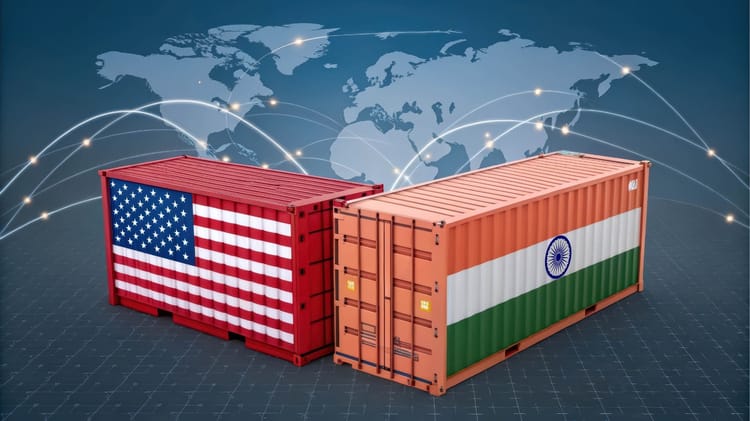
After the trade agreement with America, India should now focus on trade liberalization and structural reforms. This will strengthen the country’s manufacturing sector and increase global competitiveness. This has been said in a report by Systematics Group.
Which factors were emphasized?
- According to the report, India will first have to take steps like improving inverted duty structure, simplifying logistics and custom processes, so that input costs reduce.
- Also, there is a need to promote assembly-based manufacturing for large-scale production and employment generation.
- Systematics also emphasizes reducing protectionism, creating more free trade agreements, encouraging research and development (R&D), and easing barriers to access to land, labor and skills.
- The report said that after the interim trade agreement between India and America, India should now give priority to trade openness and deep reforms.
According to the report, this integrated model of reforms will help domestic companies adapt to advanced manufacturing standards and further integrate India into the Global Value Chain (GVC). This will not only increase India’s share in manufacturing, but will also reduce risks and achieve long-term competitiveness.
America cuts tariffs on India
It is noteworthy that the interim India-US bilateral trade agreement announced on February 7 is an important step towards a comprehensive bilateral trade agreement (BTA) starting in 2025. Under this interim arrangement, America has fixed a reciprocal tariff of 18 percent on selected products coming from India like textiles, apparel, leather, plastics, chemicals and machinery.
These areas will get relief
The report also said that after the successful implementation of the agreement, there is a plan to remove tariffs on important products like generic drugs, gems, diamonds and aircraft parts. This agreement is important from India’s perspective, because it will reduce the effective duty on Indian exports in the US market to 18 percent, which will increase the competitiveness of the products and give more flexibility to exporters in setting prices.
Apart from this, the removal of tariffs imposed on aircraft and aircraft parts under national security has been considered a big relief for the aviation sector. Getting preferential quota for automobile parts is also expected to boost manufacturing and strengthen India’s position in the global supply chain.
Overall, the report concludes that while the interim trade agreement does provide relief and opportunities in the short term, its full benefits will be realized only if India pursues deep reforms, expands trade integration and aligns its manufacturing strategy with global standards.