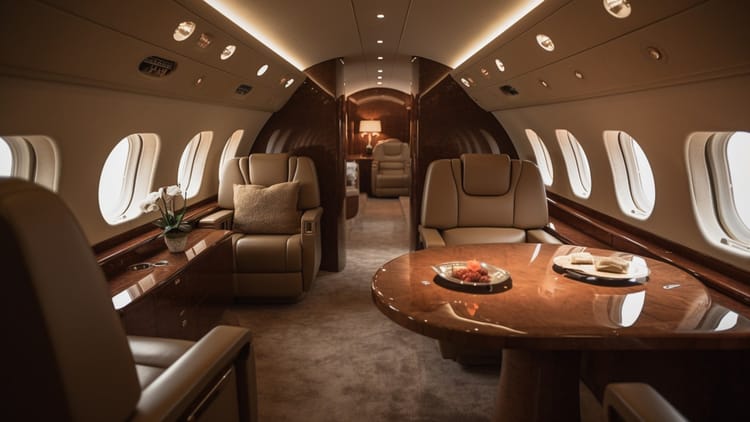
The growing strength of the private jet industry was clearly visible this time at the Singapore Airshow, Asia’s largest aviation and defense trade fair. Aircraft manufacturers are now targeting ultra-wealthy private customers and large corporate companies rather than commercial airlines.
As part of this strategy, Gulfstream prominently displayed its flagship business jet G700, which is said to be priced around $75-80 million (Rs 620-660 crore). There were long queues to see this private jet standing apart from passenger planes and military aircraft in the airshow complex.
According to the BBC, negotiations continued inside the plane with potential customers, which clearly shows that the demand from super-rich buyers in Asia is increasing rapidly.
Light from the plane’s panoramic windows hits the light-colored leather seats and polished wood veneers. The cabin has separate living areas. Grand Suite with TV console and rear shower. This design reflects not just luxury but a strategic change in the industry.
Changes in demand for business aircraft
“We are seeing a major shift in demand for business aircraft from large corporations and high-net-worth individuals,” said Scott Neal, Gulfstream’s head of worldwide sales. More companies are doing business globally and have to travel to more places. The most efficient way to do this is with business aircraft.
Also read- AI is being used extensively in business, India has emerged as the biggest power after America; Security still a challenge
All companies from Bombardier to Dassault face to face
Gulfstream is not the only player in this segment. Companies like Dassault, Bombardier, Embraer and Textron Aviation are also in the race to woo wealthy customers. Although private planes are also being criticized due to environmental concerns, aircraft manufacturers have seen a huge business opportunity in it.
According to the International Air Transport Association, airlines usually earn only two-four percent more profit than their expenses. In contrast, private jets are sold in small numbers but command extremely high prices. Companies also earn additional income from support, spare parts and maintenance programs.
New strategy: less fatigue, more rest
Today, reducing passenger fatigue has become a big selling point for private jet manufacturers. Companies are claiming that they have improved the cabin air pressure. Noise has been reduced and the interior has been designed in such a way that long flights can become more comfortable. It is these technological improvements and time-saving convenience that are increasingly attracting today’s super-rich customers to purchase private aircraft.
According to aviation intelligence firm WingX, the super-rich have increased by more than 70% in five years. The number of private jet flights globally in 2025 is 3.7 million, which is 5 percent more than 2024 and 35 percent more than the pre-pandemic level. The number of ultra-high-net-worth individuals in the world is expected to increase by more than 70 percent between 2020 and 2025.
Other videos-