
First products, then components and now semiconductors; India is building the entire electronics value chain, this is the roadmap for developed India, this is the next phase of Make in India
With a capacity of 1.5 crore chips per day, more than 5 thousand employment opportunities will be created in the next 5 years
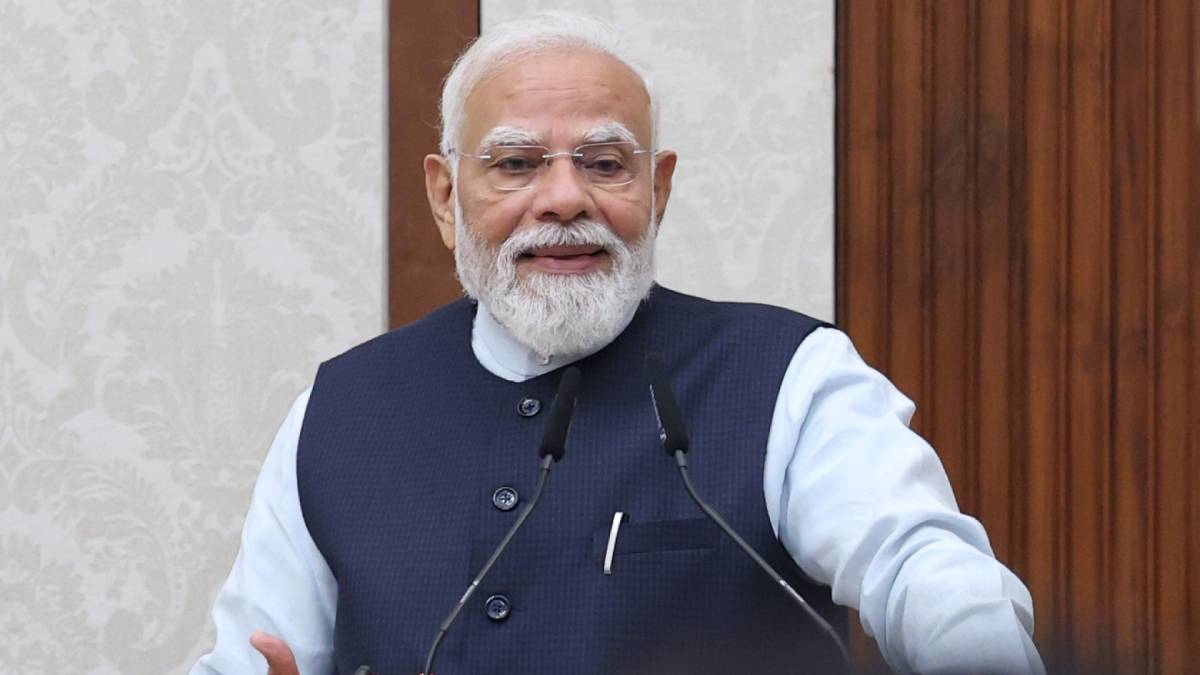
PM Modi In Ahmedabad: Prime Minister Narendra Modi today inaugurated the CG Semi Outsourced Semiconductor Assembly and Test (OSAT) facility in Sanand, Gujarat. Highlighting the significance of the occasion, the Prime Minister termed the launch as proof of the country’s unwavering resolve towards its goals.
Recalling the strategic vision launched half a decade ago, the Prime Minister mentioned the main objective of transforming the country into a global hub for advanced technology. Driven by comprehensive strategies of local design and local manufacturing, he celebrated the official launch of commercial chip packaging at this third major facility.
PM Modi said that we have successfully moved ahead with the basic mantra of ‘Design in India’ and ‘Make in India’. Reflecting on the timeline for the rapid development of the project, the Prime Minister recalled the foundation stone laying in the year 2024 and appreciated the speedy start of chip testing by August 2025. He attributed this incredibly fast journey from planning to full-scale production to the relentless dedication and focus of countless project collaborators. This extraordinary journey from foundation to production is definitely the result of hard work of many colleagues.
Recalling his personal encounters before addressing the public, the Prime Minister shared his experiences interacting with the dedicated staff stationed at the facility. After interacting directly with numerous young professionals during the exhibition visit, he admired their incredible energy, optimism and positive outlook.
The Prime Minister remarked that all the young comrades I spoke to today are full of confidence. Describing the newly constructed facility as a symbol of international cooperation, the Prime Minister lauded the joint efforts of local, Japanese and Thai industry partners. He described the venture as much more than a simple business venture and underlined it as a strong model of technological trust and cross-border partnership. “This integrated partnership is going to give a completely new impetus to India’s semiconductor journey,” asserted Mr. Modi.
The Semicon India program is gaining momentum; Step by step, brick by brick, chip by chip
Appreciating the enormous scale achieved in the last two and a half years, the Prime Minister praised the entry into active commercial production with the capacity to supply 20 crore units annually. Expressing full confidence in the team’s ambitious target of reaching 500 crore units annually, he attributed the rapid progress to the accelerating pace of the countrywide technology programme. I congratulate the entire team, the state government and the entire country for building this system step by step, brick by brick and chip by chip.
Addressing the industry experts and youth present, the Prime Minister cited important lessons from global industrial history and emphasized that true manufacturing power does not come from setting up isolated factories alone. Citing legendary tech hubs like Silicon Valley, Hsinchu Science Park and Tsukuba Science City, he emphasized the imperative to develop a comprehensive, integrated ecosystem. Today Sanand is steadily moving in the same direction to establish such powerful clusters.
The next step in the electronics revolution in India in a decade
Detailing the rapid emergence of a strong ecosystem at the local level, the Prime Minister said how leading companies like Micron, Keynes and CG Semi have all started manufacturing together in the region in just a few months. Envisioning the arrival of specialty chemical manufacturers, testing labs, design centers and dynamic new startups in the near future, he elaborated on how local industries multiply the broader economic and employment opportunities.
This is the true power of a cluster, where one industry gives rise to ten other industries and ultimately transforms the economy of the entire region. Addressing the nationwide and global enthusiasm over the boom in the sector, the Prime Minister corrected the misconception that this rapid growth was an isolated phenomenon.
He explained that the current expansion is actually a well-planned progression arising out of the long-term technological policies formulated over the past 10 years. Modi noted, “This is a natural next step in the electronics revolution that has taken place in India over the past decade.
Talking about the origin of this domestic manufacturing success, the Prime Minister compared past reliance on imported smartphones with the current manufacturing boom. Noting a staggering 33-fold increase in output, he proudly acknowledged the country’s new status as the world’s second largest manufacturer and exporter in the mobile sector. Mr. Modi said, “We deliberately started our journey with mobile phone manufacturing to finally achieve these amazing milestones.
Assessing the massive success of the local ecosystem in recent years, the Prime Minister shared statistics of significant growth across the sector. He disclosed that the total production has increased by almost 7 times compared to the level of 2014, with a whopping 11 times jump in overall exports.
We have successfully and comprehensively strengthened the entire electronics manufacturing ecosystem, PM Modi asserted. Elaborating on the government’s strategic roadmap, the Prime Minister clarified that the ultimate goal goes far beyond achieving self-reliance only in end consumer products and also includes its basic components.
He outlined a complete, end-to-end local value chain with a commitment to produce chips that power global technology. “First product, then components and now semiconductors; this is the crucial next phase of Make in India,” said Mr. Modi.
Presenting a map of the future phases of the ecosystem, the Prime Minister emphasized the dire need for self-reliance in hi-tech materials and critical minerals to secure the entire supply chain. Envisioning a local network spanning from design to packaging, he expressed immense faith in the younger generation to use these local chips for the next revolution in AI and robotics. “Our youth will actively fuel the next generation tech revolution by using only Made in India chips,” Modi asserted.
In his message to the youth, the Prime Minister highlighted historical examples that show how major industrial transformations always create unprecedented employment opportunities. Drawing parallels with the vast opportunities opened up by the earlier IT and smartphone manufacturing booms, he predicted similar vast horizons emerging from the current technological wave.
The Prime Minister said, this era of semiconductor and AI revolution is bringing countless opportunities from research and design to supply chain management.
Challenging the workforce of the future to constantly adapt, the Prime Minister emphasized that staying relevant in the modern age depends on acquiring new skills and developing innovative ideas. Pointing to the vast new dimensions opened up by artificial intelligence, he urged the younger generation to seize these emerging opportunities with utmost enthusiasm.
The youth of India should never miss this wonderful opportunity to learn and implement something new. Demonstrating the inclusive social implications of this technological advancement, the Prime Minister shared inspiring stories of young women from the tribal community who are actively working in this new facility. Deeply impressed by their common background and their journey from studying at ITI to receiving advanced technical training in Malaysia, he appreciated that these daughters, despite never having traveled outside their home region before, were instrumental in running the world’s most sophisticated manufacturing processes.
These daughters with truly extraordinary dreams are today an integral part of the ‘Made in India’ chip manufacturing process. Concluding his address by reiterating that the country is moving at a fast pace towards becoming a fully developed nation, the Prime Minister celebrated the timely realization of several manufacturing plants promised just a few months ago.
He promised an even faster pace of systemic economic reforms, assuring global investors of absolute policy stability, clear decision-making and unparalleled implementation speed. With full commitment to Ease of Doing, 140 crore Indians will definitely make the country developed by the year 2047.
Addressing the great enthusiasm across the country and globally over this sectoral boom, the Prime Minister corrected the misconception that this rapid growth was a one-off phenomenon. He explained that the current expansion is actually a well-planned progression arising out of long-term technological policies laid down over the past ten years. This is the natural next step in the electronics revolution that has taken place in India over the last decade.
Tracing the roots of this local manufacturing success, the Prime Minister compared past reliance on imported smartphones with the current boom in manufacturing. Noting a staggering 33-fold increase in production, he proudly acknowledged the country’s new status as the world’s second largest manufacturer and exporter in the mobile sector. We deliberately started our journey with mobile phone manufacturing to finally achieve these incredible milestones.
Stating the broad success of the local ecosystem in recent years, the Prime Minister shared statistics of remarkable growth across the sector. He revealed that total production has increased by nearly seven times compared to 2014 levels, with an impressive 11-fold explosive growth in overall exports. We have successfully and comprehensively strengthened the entire electronics manufacturing ecosystem.
Elaborating on the government’s strategic roadmap, the Prime Minister clarified that the ultimate goal goes far beyond self-reliance in end consumer products and extends to its basic components. Committed to producing chips that power global technology, he outlined a complete, end-to-end local value chain. Prime Minister Modi claimed, “First product, then components and now semiconductors; this is the crucial next phase of Make in India.
Presenting a map of the future phases of the ecosystem, the Prime Minister emphasized the critical need for self-reliance in hi-tech materials and critical minerals to secure the entire supply chain. Envisioning a local network spanning from design to packaging, he expressed immense faith in the younger generation to use these local chips for the next revolution in AI and robotics. Our youth will actively fuel the next generation tech revolution using fully Made in India chips
Directing his message to the youth, the Prime Minister highlighted historical examples that show how major industrial changes continue to generate unprecedented employment prospects. Drawing parallels with the enormous opportunities unlocked by earlier IT and smartphone manufacturing booms, he predicted similar vast horizons arising from the current technological wave. The era of semiconductor and AI revolutions is bringing countless opportunities from research and design to supply chain management.
Challenging the workforce of the future to constantly adapt, the Prime Minister emphasized that staying relevant in the modern era is entirely dependent on acquiring new skills and cultivating innovative ideas. Pointing to the vast new dimensions unlocked by artificial intelligence, he urged the younger generation to seize these emerging prospects with immense enthusiasm. “The youth of India should never miss this wonderful opportunity to learn something new and implement it,” claimed Mr. Modi.
Demonstrating the inclusive social implications of this technological advancement, the Prime Minister shared inspiring stories of young women from tribal communities actively working in the new facility. Deeply influenced by his common background and his journey from ITI studies to advanced technical training in Malaysia, he appreciated his vital role in running the world’s most advanced manufacturing processes, despite never having traveled outside his home country before. These daughters with truly extraordinary dreams are today an integral part of the Made in India chip manufacturing process.
Concluding his address by reiterating the rapid pace towards making the country a fully developed nation, the Prime Minister celebrated the timely realization of multiple manufacturing plants promised just a few months ago. He promised an even faster pace of systemic economic reforms, assuring global investors of absolute policy stability, a clear decision-making process and unparalleled implementation speed. “With full commitment to Ease of Doing Business, 140 crore Indians will surely make the country developed by 2047,” asserted Mr. Modi.