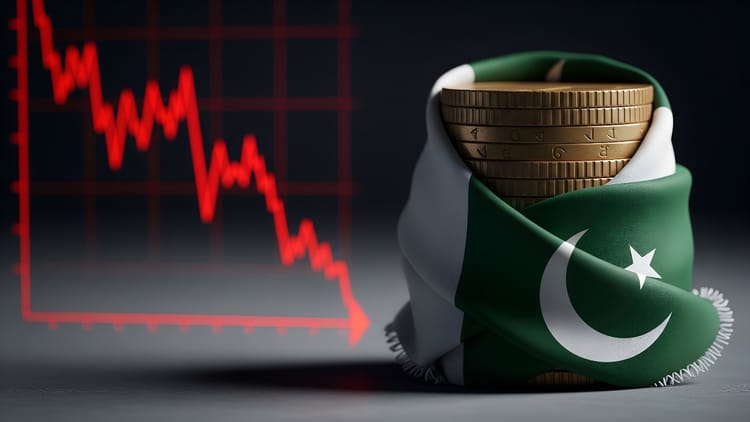
Pakistan has been struggling with a deepening economic crisis for the last several years. The country faces rising external debt, sluggish economic growth and weak structural reforms, which are the result of decades of poor governance and excessive dependence on external financing. This is creating huge pressure on the country’s economy.

Pakistan’s total debt reached 134 billion dollars
According to an article published in One World Outlook, Pakistan’s total external debt is expected to reach approximately $134 billion by the end of 2025. The country faces external debt service (including principal and interest) of $23-26 billion in FY 2025-26, putting severe pressure on the balance of payments.
Pakistan is forced to depend on allied countries
The recent rollover of Pakistan’s $2 billion loan by the United Arab Emirates (UAE) reflects this fragile financial situation. The report said such temporary measures underline Pakistan’s continued dependence on allies UAE, Saudi Arabia and China. With their help, Pakistan is avoiding the immediate default risk. However, the UAE granting an extension of only one month also points to a change in risk perception or geopolitical reasons.
- There has definitely been some improvement in foreign exchange reserves.
- Total liquid reserves reached $21.29 billion by the end of January 2026, but the situation still remains vulnerable due to upcoming maturities and import requirements.
- The International Monetary Fund (IMF)’s $7 billion Extended Fund Facility (EFF), approved through September 2024, has been crucial for stability.
- The tranche was released after the completion of the second review in December 2025, but further progress will depend on fiscal discipline, tax base expansion and reforms of public enterprises (SOEs).
- According to the report, bilateral rollover commitments this year amount to about $12 billion, but the terms now appear to be more commercial than before.
Along with challenges on the economic front, the employment crisis is also deepening.
- The official unemployment rate is expected to rise to around 6.9% in 2024-25, while the number of unemployed has increased by 31% (about 14 lakh) between 2020-21 and 2024-25.
- Due to limited opportunities, stagnant wages and rising inflation, a large number of people are going abroad in search of work.
- The current growth rate of the economy has been around 3%, which is considered inadequate for the rapidly growing population and the 15 lakh new jobs required every year.
- Increases in taxes and energy tariffs under IMF programs, as well as the impact of natural disasters such as floods, have made the situation more difficult.