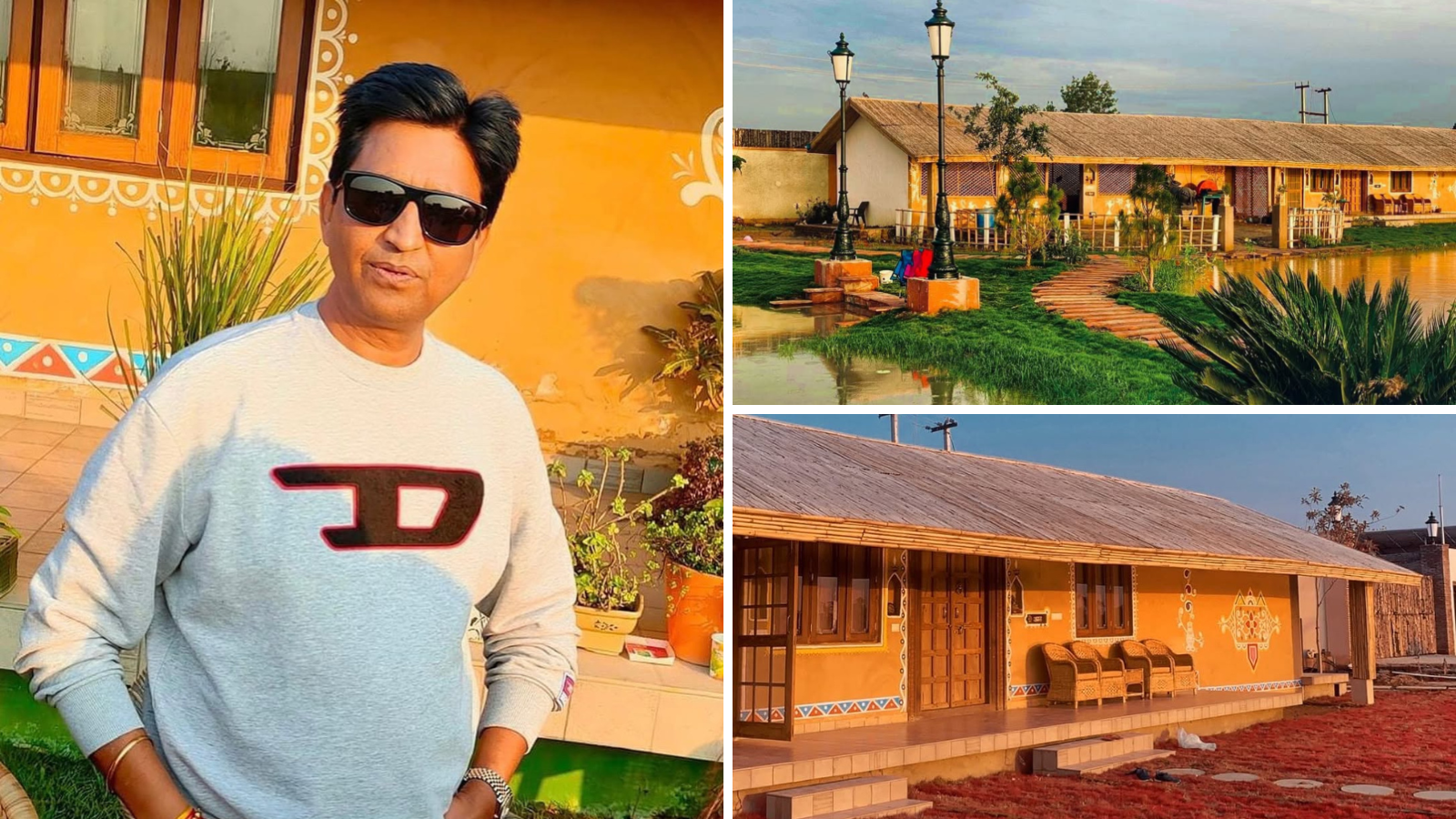
While sharing the information about his KV cottage, Kumar Vishwas had said that he has not consulted any interior designer for the special design but has trusted the indigenous skills. After knowing the complete information related to applying Vedic plaster and its benefits, you can also consider applying it in your house, which will give you a feel of nature amidst the hustle and bustle of the city.
What is Vedic plaster?
Actually, Vedic plaster is made using natural things like cow dung, gypsum, clay, guar gum and lemon juice. The lifespan of this plaster is longer than cement, because gypsum is mixed inside it. Gypsum and cow dung also improve barren land. The possibility of damage to the plaster and colors done on the house is reduced.
First advantage- thermal insulation
The biggest feature of Kumar Vishwas’s house is said to be that it remains cool from inside even in summer. This is because of Vedic plaster itself, which works as a thermal insulator. Reduces the temperature inside the house in summer while preventing the heat from the room from escaping outside in winter. This makes the environment of the house comfortable and also saves on electricity bills.
There is no problem of dampness
Compared to cement plaster, Vedic plaster is better at preventing dampness in the house. Because moisture gets trapped in cement plaster, which increases the risk of dampness and fungus on the walls. Whereas walls with Vedic plaster absorb moisture due to which dampness, fungus and bacteria do not grow in the walls.
Such a house is anti-bacterial
As Kumar Vishwas had told that his house is completely anti-bacterial. Actually, it is believed that cow dung has anti-radiation properties. Vedic plaster helps in reducing the effects of harmful electromagnetic radiation of mobile and Wi-Fi.
Water is also saved
The cost of water in building a house using Vedic plaster is reduced by about 90 percent. Actually, for cement plastering, water has to be poured on the house for about 8 to 10 days, whereas while doing Vedic plaster, water is required only once. This saves water cost as well as electricity.
Vedic plaster breaks down and turns into compost.
Cow dung is used in making Vedic plaster. Due to the presence of gypsum, guar gum and lemon or aloe vera juice, when the building is demolished after a long time, this plaster takes the form of manure. It is especially useful in making barren land fertile. High amount of gypsum and cow dung plays an important role in this.
Disclaimer: The claims made in this article are based on information found on the internet. NBT does not take responsibility for its truthfulness and accuracy.