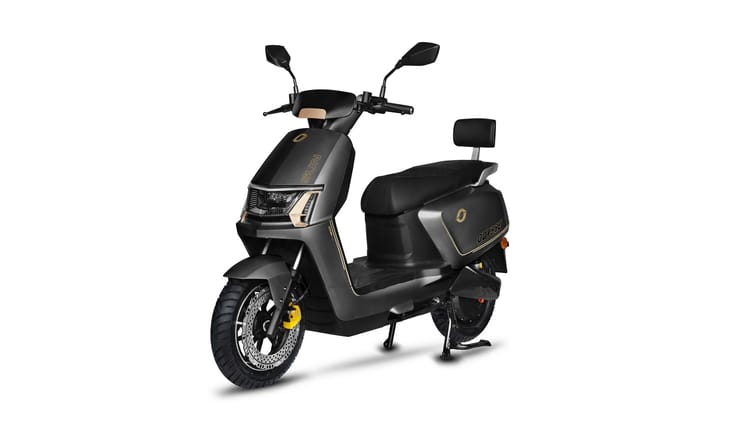
Due to improvement in the supply of rare minerals, sales of electric two-wheelers (e-two-wheelers) in the country may increase by 16-18 percent during the next financial year 2026-27. However, due to supply chain constraints in the current financial year 2025-26, the growth in sales of e-two-wheelers may be limited to 12-13 percent. Electric two-wheeler growth in the current fiscal may remain temporarily subdued due to disruption in the supply of rare minerals (rare-earth magnets) and GST rationalization on internal combustion engine (ICE) models, CRISIL Ratings said in a report.
However, sales of e-two-wheelers have improved in recent months. In the financial year 2024-25, the pace of growth in sales of electric two-wheelers was 22 percent. Anuj Sethi, senior director, CRISIL Ratings, said supply disruptions caused by shortage of rare minerals impacted sales of electric two-wheelers in the middle of the year.
Improve mineral availability
As the availability of these minerals improved and there was price revision with the GST cut in ICE models, original equipment manufacturer (OEM) companies passed on price discounts to customers. Also, low-cost electric two-wheeler models were introduced to reduce the ICE-EV price gap.
Old companies dominate 62% market
Crisil Ratings Director Poonam Upadhyay said, the market share of old companies increased from 47 percent a year ago to 62 percent by January 2026. This is a better performance than the new companies. This increase in market share reflects the legacy companies’ strong dealer network and supply chain along with the increased range of entry-level and mid-priced electric models. Reliability and service remain the key reasons where legacy OEM companies are doing well right now.
Ownership increasing due to low running costs
The report said that the purchase cost of ICE vehicles has reduced due to reduction in GST rates, but in terms of running cost, e-two-wheelers are better. Their running cost is around Rs 3/km, whereas for ICE trains it is Rs 2-2.5/km. This maintains the advantage of e-two-wheelers in total ownership cost, even as subsidies are reducing.
Older companies are in a better position to withstand pressure
The estimated growth of 16-18 per cent is being supported by institutional ownership-cost advantages, the rating agency said. However, competitive pressures are creating different risks, with older players (companies) being better positioned, while new players are facing weaker unit-vehicle economics.
other videos