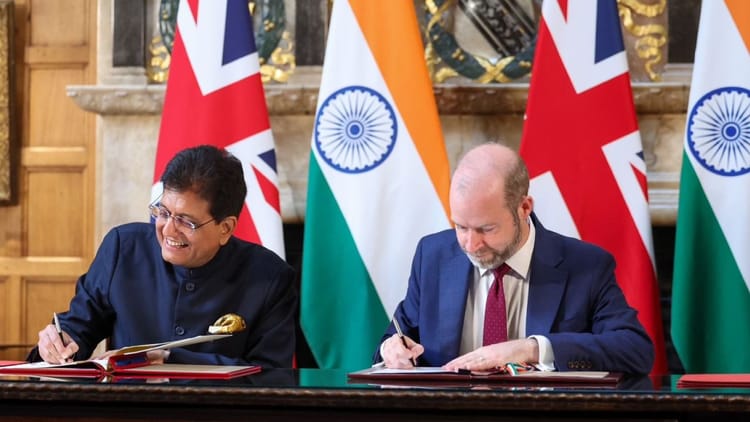
The Comprehensive Economic and Trade Agreement (CETA) signed between India and Britain in July 2025 is likely to come into force from April 2026. Preparations are underway to implement this agreement parallelly between the two countries.
Under the agreement signed in July, 99% of India’s exports will enter the UK market at zero duty. At the same time, there will be a phased reduction in import duty on British products like cars and Scotch whiskey in India. Duty on Scotch whiskey will be reduced from 150% to 75% and brought down to 40% by 2035. Import duty on automobiles will be reduced to 10% in five years, from 110% currently. Under the agreement, India has opened up markets for consumer products like chocolates, biscuits and cosmetics, while Indian textiles, shoes, gems and jewellery, sporting goods and toys will get access to Britain.
Also read: Finance Minister Nirmala Sitharaman met prominent international leaders, emphasis on investment and cooperation
Double contribution treaty is also signed
Both countries have also signed a double contribution treaty, whereby temporary workers will not have to pay social contributions twice. The agreement requires approval by the UK Parliament before it can be implemented. There, debate and review is going on in the House of Commons and House of Lords. It aims to double bilateral trade to $56 billion by 2030.