The impact of Japan’s Prime Minister Takaichi’s ruling party winning the parliamentary elections with a two-thirds majority was visible on the global market. Tokyo’s Nikkei 225 share index rose as much as 5 percent to a record high. The dollar weakened slightly against the Japanese yen and traded at 156.71 yen, down from 157.10 yen late Friday.
Record victory since the establishment of the party
- As of Monday morning, Takaichi’s Liberal Democratic Party (LDP) alone had secured 316 seats, NHK said, citing vote counting results.
- This easily gave them an absolute majority of 261 seats in the 465-member lower house.
- This is a record since the establishment of the party in 1955.
- It also surpasses the previous record of 300 seats won by late Prime Minister Yasuhiro Nakasone in 1986.
LDP became a strong government from a very weak government.
Neil Newman, managing director and head of strategy at Astris Advisory Japan, said that overall, the LDP has gone from an extremely weak government that couldn’t really do anything, to an extremely strong government with an overwhelming majority in the lower house, and they can actually make decisions.
When the lower house resumes session in mid-February, Takaichi’s first major task will be to work on a budget bill, delayed by the election, to fund economic measures to tackle rising costs and sluggish wages.
Political ambiguity regarding Japan removed in the market
Stephen Innes of SPI Asset Management said in a comment that Japan has just delivered the kind of election result that markets naturally accept because it removes the one thing that traders value at a premium: political ambiguity.
He said that politically, the victory gives Prime Minister Takaichi freedom of movement and eliminates the need to bargain every decision down to the lowest level.
Mixed situation seen in European markets
In early trading in Europe, Germany’s DAX rose 0.6 percent to 24,864.59, while Paris’s CAC 40 rose 0.2 percent to 8,288.06. Britain’s FTSE 100 rose 0.3 percent to 10,399.61.
Slight rise seen in American market
US futures markets were marginally higher after a strong rally in US stocks on Friday, as technology stocks largely recouped losses suffered earlier in the week and Bitcoin prices halted their decline. S&P 500 futures rose 0.1 percent, while Dow Jones Industrial Average futures were up 0.2 percent.
The S&P 500 rose 2 percent, its best performance since May. The Dow Industrials jumped 2.5 percent and crossed the 50,000 level for the first time. The Nasdaq Composite gained 2.2 percent. Stocks rose Monday morning on a combination of a surge in tech stocks, a rally on Wall Street and other positive news.
In Tokyo, the Nikkei 225 rose 3.9 percent to 56,363.94. Earlier in the day, the benchmark had hit a new intraday record of 57,337.07. The landslide election victory has given Takaichi an even stronger mandate to pursue market-friendly policies.
Condition of other markets in Asia
- In Seoul, the Kospi index rose 4.1 percent to 5,298.04 on strong buying of technology shares.
- Hong Kong’s Hang Seng index rose 1.8 percent to 27,027.16.
- The Shanghai Composite Index rose 1.4 percent to 4,123.09. Taiwan’s Taiex index rose 2 percent.
In Australia, the S&P/ASX 200 rose 1.9 percent to 8,870.10. The rise in shares of computer chip companies played an important role in the broad rally on Wall Street on Friday. Nvidia shares jumped 7.8 percent and Broadcom shares jumped 7.1 percent.
One percent decline in bitcoin
In other trading on Monday morning, Bitcoin gained 1 percent and was trading just below US$70,000. A week of sustained losses had sent it down to nearly US$60,000 by late Thursday, more than half its high set in October.
Fluctuations seen in the prices of gold and silver
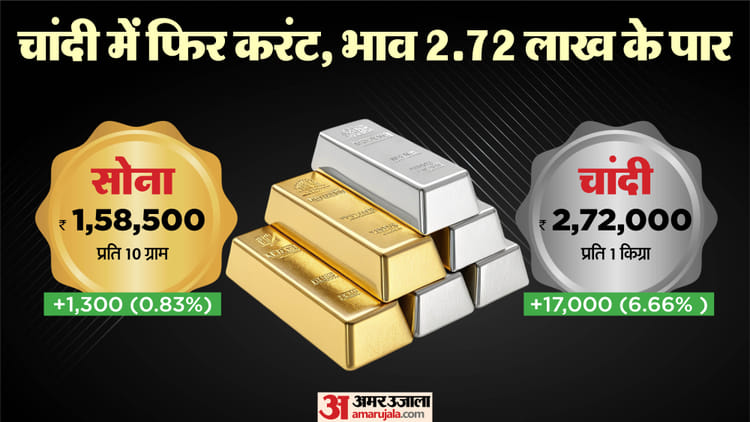
After huge price fluctuations in the metals market, there has now been some stability. Gold rose 1.4 percent to US$5048.90 an ounce, while silver rose 6.2 percent to US$81.64.
The price of Brent crude fell to US $ 67.45 per barrel.
US benchmark crude fell 60 cents to US$62.95 a barrel. The price of international benchmark Brent crude also fell 60 cents to US$67.45 per barrel.